· 4 min read
Darwin and the Way of walking
Originally written in Italian. This English version is an automatic translation and has not been reviewed: it may contain errors. Read the original
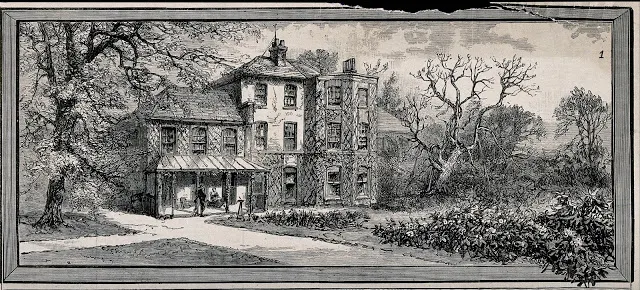
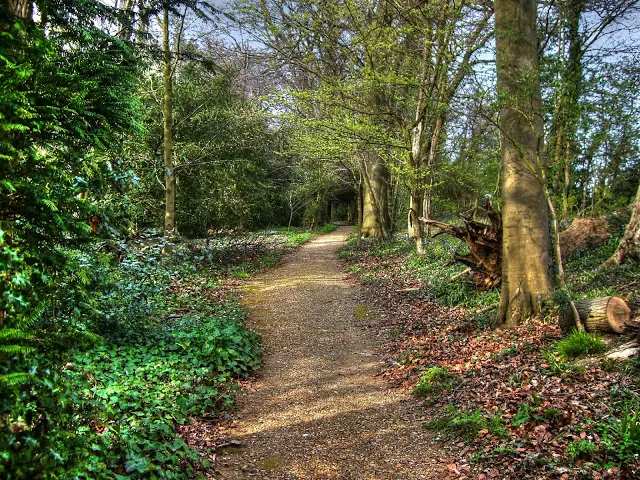
In 1837, back from a voyage of almost five years aboard HMS Beagle spent observing the natural history of South America and the Pacific, Charles Darwin moved into a house in central London, certainly a good position for exchanging ideas with the scientific world of the time. Five years later, however, in 1842, he and his wife Emma retreated to a quiet house in the English countryside, while staying close enough to London to be within reach of friends and to hear about the latest studies and research. His aim was to start a family and escape the distractions of the city. Today the house is a museum, run by English Heritage, and is open to visitors. It is large and white, with a broad garden that stretches into the park and then into the surrounding countryside, covering more than seven hectares. Darwin had acquired the land from a neighbour, planted hazels, birches, dogwoods, hornbeams and other trees, and laid out a dirt path for walking on his property, a tree-lined avenue running all the way round “Down House”. Almost every day Darwin walked this path, the “Sandwalk”, thinking about the many problems that formulating the theory of evolution certainly posed him. His method was this: as soon as he had an idea, he would subject it to every possible objection until he had found all the answers and could consider it proof against refutation. On each lap of the Sandwalk, he moved a pebble from the path to the edge of the track. When he had solved the problem, he looked at how many pebbles he had piled up, and therefore how many laps he had walked thinking about the solution. In this way he catalogued the importance and difficulty of the problems he was tackling and solving. For almost forty years Darwin walked this path of about four hundred metres up and down, meditating on his ideas, in one of the most fruitful periods of his life.
On the north side of the property he had a boundary wall about three metres high built, raising the ground, planting new trees and lowering the road that ran round the house, and building another wall with the stones dug up during the works. The aim was to avoid unexpected interruptions, steering clear of gossip and the distractions of society so as to have a quiet place in which to give shape to his thoughts. Over time he made other changes to the house too, building a greenhouse and devoting part of the garden to his research, observing the local ecology and noticing interesting things that, in his view, others ended up missing. Down House thus became his personal scientific station, but also a place to amplify his mind and regain his concentration. According to the famous scientist’s biographers, the years spent at Down House were just as fundamental as those spent travelling the world on the Beagle.
When friends or other scientists came to visit, they would chat while walking the Sandwalk, further proof of the connection between walking and thinking. In Darwin, as in many other thinkers, scientists and illustrious figures, walking plays a fundamental role in reflection and creativity. Walking stimulates thought, offering a break from activities that require great concentration without distracting the mind altogether, but rather giving it an opening to refocus. In the walks Darwin had taken since childhood he probably found strength and comfort, managing to forge a lasting connection between walking and contemplation. By piling up pebbles at the side of the path with each new lap, walking became not only a way of keeping track of the complexity of a problem, but of physically advancing on foot towards its solution.
From the Sandwalk to Thoreau’s woods, the need for a simple contemplative space that offers contrast, accessible yet far from the comfort of stagnation, creates a state in which action and contemplation do not exclude each other, but come together in a sweet symphony. Next time you feel tired or struggle to concentrate, instead of drinking yet another coffee in the hope of curing your drained mind, go out for a walk. If you learn to do it every day, carefully choosing the space you immerse yourself in, occupying your conscious mind and leaving your unconscious free to wander effortlessly, you too will have found your own Way.
Further reading
- Pellegrinaggio laico: i luoghi di Darwin (“A secular pilgrimage: Darwin’s places”, in Italian) — I Viaggiatori Ignoranti
- Home of Charles Darwin, Down House — English Heritage
- Dipendenza digitale (Italian edition of The Distraction Addiction), Alex Soojung-Kim Pang
- “Uomini strade impronte” (“Men, roads, footprints”, in Italian) by Paolo Repetto


Comments