· 4 min read
Digital package leaflets (eBooks)
Originally written in Italian. This English version is an automatic translation and has not been reviewed: it may contain errors. Read the original
EULAs (End-User License Agreements) are undoubtedly the package leaflets of the third millennium. As with medicines, in fact, these digital contracts come to the aid of the software we take on faith every day, hoping it will help us do things better and cure us of the rush of living. And like package leaflets, they are often miles long and full of contraindications, so we skip reading them altogether, convinced that being unaware of their contents makes us freer to use them and certainly calmer, a bit like that old saying: “I read that drinking is bad for you. So I gave up reading”.
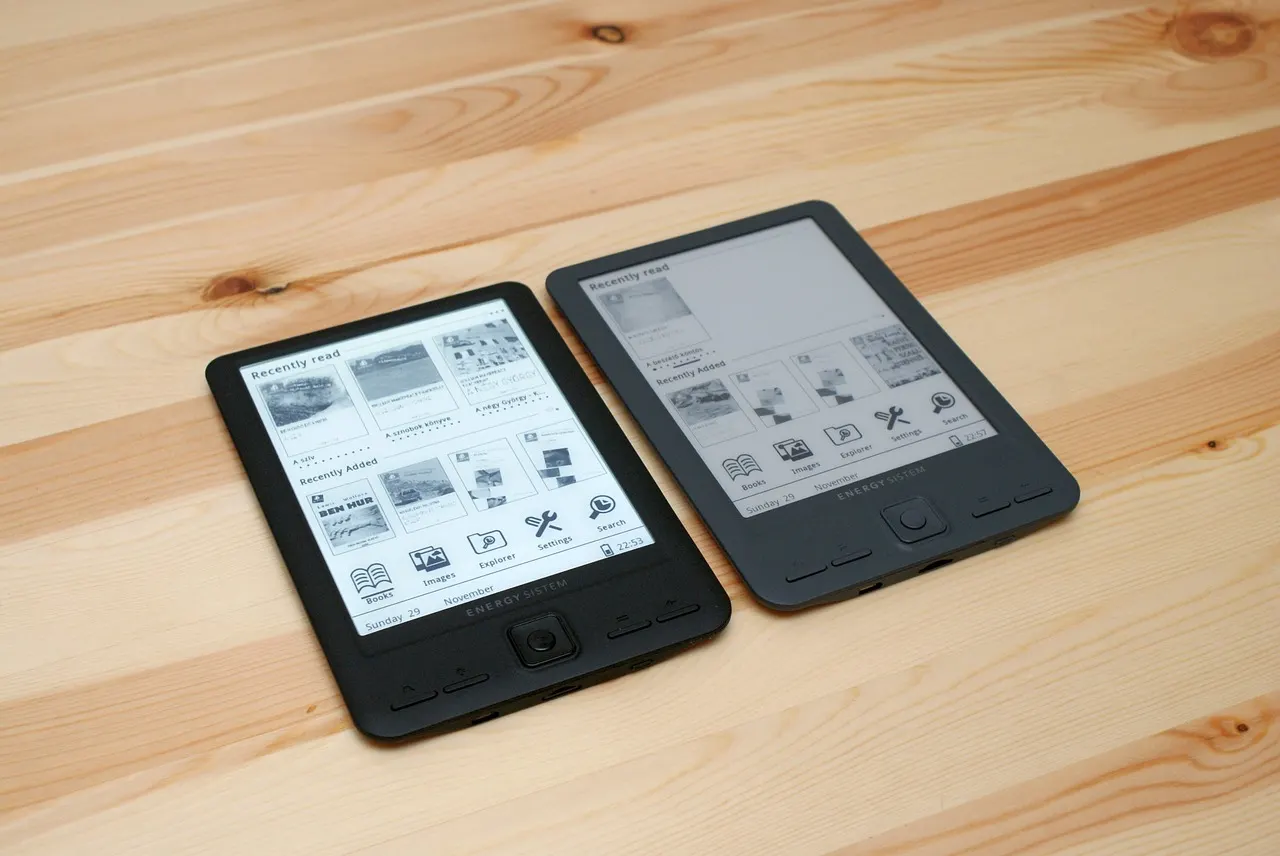
Reading a licence agreement in detail for the software and digital services we use every day can, however, be surprising, as well as incredibly boring, and make us more aware of the conditions governing our relationship with the company that provides the service and the service itself. I recently did so for the terms of use of the Kindle (in the version in force in 2019), Amazon’s eBook reader, after a friend (a digital one too) alerted me to a “condition of use” that I will quote here. The sensible premise, actually not so sensible in the digital age, as we’ll see, would be that if I buy a digital book it belongs to me just like a paper one, as clearly suggested by the button reading “Buy now with 1-Click”. Leaving aside how cheapened the purchase of a good becomes with no human contact and no effort at all (perhaps we’ll talk about that in a future instalment), what does it mean to buy a digital good? According to Amazon, “Upon your download of Digital Content and payment of any applicable fees (including applicable taxes), the Content Provider grants you a non-exclusive right to view and use the Digital Content an unlimited number of times. […] Unless otherwise specified, Digital Content is licensed, not sold, to you by the Content Provider”. In other words, even though the obvious red button mentioned above suggests I am buying the book, in actual fact I am borrowing it for an indefinite time, having been licensed to read it an unlimited number of times. It might seem almost the same thing, but at this point we enter, with every right, the age-old debate between supporters of digital books and paper books. The question therefore arises naturally: what if Amazon closes down? What if, from one day to the next, Amazon decides to leave the digital book market? What if…? And the answer, once again, is: “We may change, suspend or discontinue the Service, in whole or in part, including adding or removing Subscription Content from a Service, at any time. We may amend any of this Agreement’s terms at our sole discretion by posting the revised terms on the Amazon.it website.”. So, by building a rich library of digital books (so to speak), the risk is that one day you’ll see it burn overnight with no right of reply. But of course the matter doesn’t end there, since not only am I not buying the book, not only can Amazon take my books away whenever and however it likes, but also (sed etiam, as the Latin has it) “you may not sell, rent, lease, distribute, broadcast, sublicense, or otherwise assign any rights to the Digital Content or any portion of it to any third party, and you may not remove or modify any proprietary notices or labels on the Digital Content. In addition, you may not bypass, modify, defeat, or circumvent security features that protect the Digital Content.” So, while I can sell a paper book, lend it to a friend or a cousin, or donate it to a library if I no longer need it, for someone else’s benefit, the digital book remains a string of bits licensed for my use alone, a string of bits constantly at risk of being overwritten by the contraindications in the leaflet. At this point the question changes and becomes: so is an eBook still a book or not? In fact the answer is less surprising than it might seem (or perhaps more, it’s up to you): no, an eBook is not a book. A distinction that, incidentally, matched the law until recently, since for tax purposes only paper books were granted the reduced 4% VAT rate, which eBooks did not enjoy, a sign that an eBook evidently did not meet the requirements to be considered a book; an opinion the Italian State changed in 2015, applying the reduced VAT rate to digital “books” too.
The digital age therefore seems to be pushing us more and more towards a dimension in which nothing belongs to us any more, but everything is borrowed from large corporate entities, from Amazon to Netflix, in exchange for a monthly, weekly or one-off fee, paid in real money and taking care not to read the leaflet. Car sharing, streamed music and films, digital books: the era of ownership is over, and streamed houses, holographic food and digital toilet paper are expected shortly. Better or worse? As usual, let posterity judge.
Further reading
- Kindle Store Terms of Use (in Italian) — Amazon


Comments (1)
Older comments come from the previous blog, in Italian.
Vvalter scarfia
L'ha ribloggato su NON DI SOLA TECNOLOGIA ....