· 3 min read
Where It's Always Summer
Originally written in Italian. This English version is an automatic translation and has not been reviewed: it may contain errors. Read the original
Are you sorry to be going home?
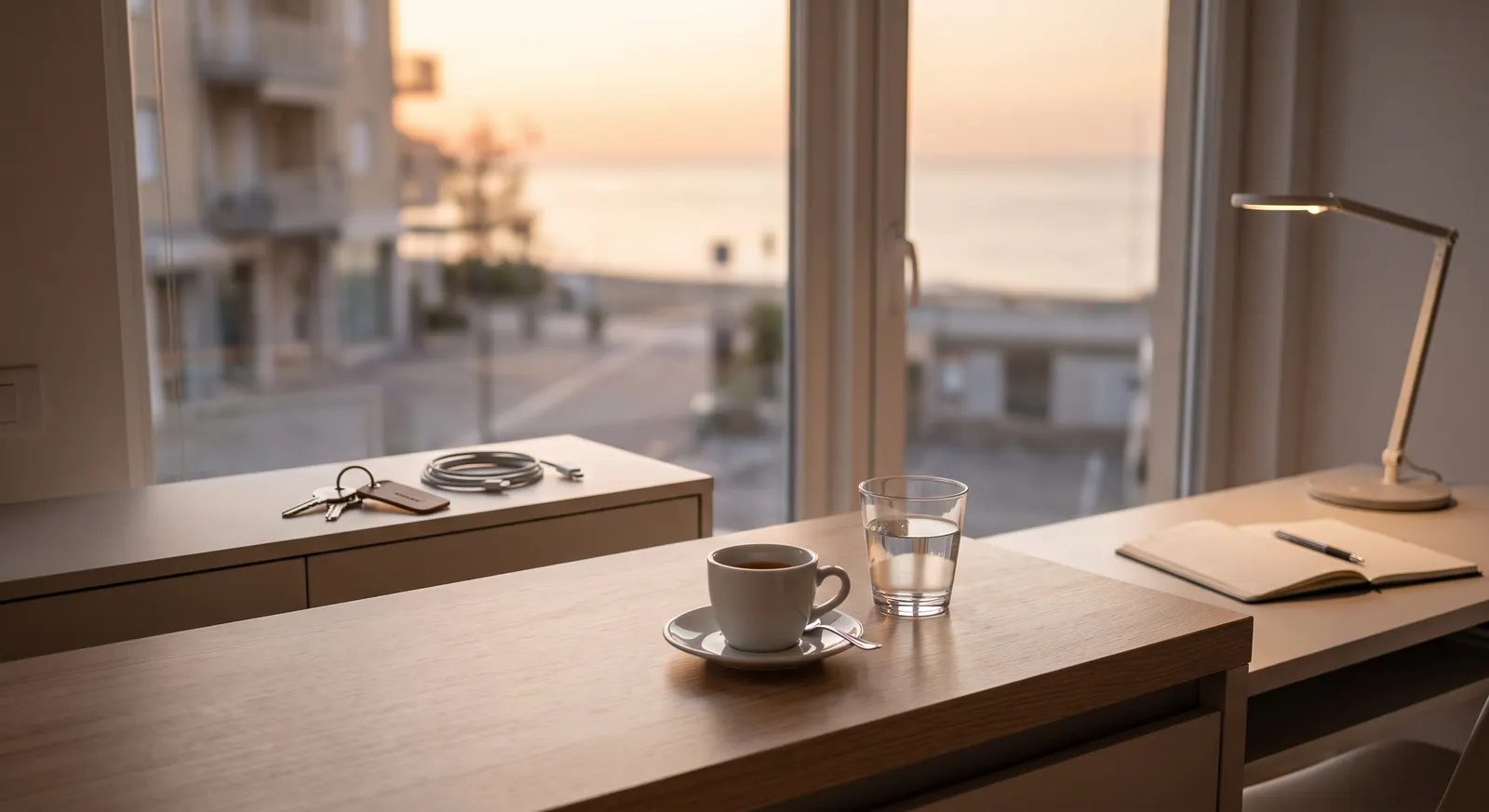
Someone asked me this a few days ago, on Ferragosto (the mid-August bank holiday), in that slightly resigned tone people use when they take the answer for granted. Around me, most people are living through these days with a mix of anxiety and melancholy: the holiday is ending, the return looms, and with it the idea of having to start everything all over again. I answered without thinking too much: “Honestly, no.” Not because the holiday went badly, quite the opposite. But because the idea of going back to my routine doesn’t bother me at all. I like it. And that spontaneous answer made me think about something bigger: our strange, almost chronic, inability to stay in the present.
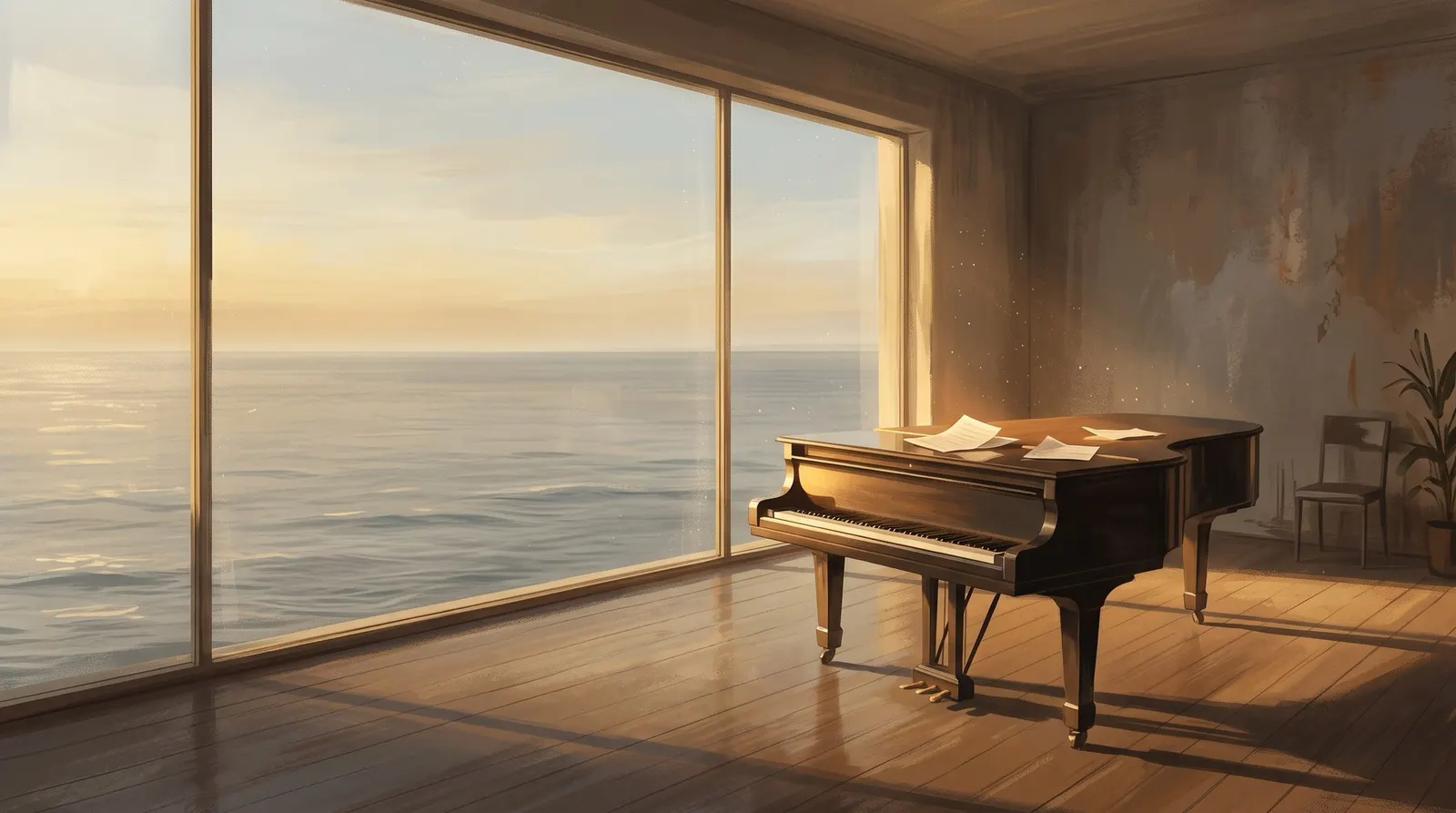
There is a monologue by Novecento, the pianist dreamt up by Alessandro Baricco, that captures this mechanism perfectly:
“In winter you can’t wait for summer to come, and then, in summer, you’re afraid winter will come back. That’s why you never tire of travelling, of chasing the place where you are not: where it’s always summer…can’t be much of a job.”
It is a merciless snapshot of how we work. We spend Monday waiting for Friday, the working year waiting for the holidays. And when we are finally on holiday, part of us is already starting to dread going back. It is one wait piled on top of another. We are never really where we are. We are always a step ahead, more often a step behind, never in the present.
And in the meantime, the present stays there. Unheard. Perhaps that is also why I don’t mind going back too much. Not because I prefer work to holidays, of course, but because I don’t see everyday life as something I constantly have to escape from.
Here, though, I’d like to go one step further than Novecento, who never finds that place and ends up never even getting off the ship. I think the end of a holiday is not a sentence but a necessary condition. A book has value precisely because it ends: if it never ended, it wouldn’t be a story, it would be background noise. A holiday is special because it has a precise beginning and end: that limit gives it shape, intensity and meaning. If it were endless, it would simply lose all its flavour — it would become the new normal, with its new boredoms and its new waits. Finiteness is not the flaw of beautiful things. It is the reason they are beautiful.
Even the stages of life we would like to freeze become meaningful precisely because we know, at least in part, that they won’t last forever.
And routine, the one so many people dread going back to, is not the prison it is often made out to be. It is the structure within which we build something more solid than the emotions of a fortnight. Routine trains the patience that holidays don’t require. We build ourselves, day after day, in a way that no temporary escape can replicate. It is no coincidence that, often, the most restless people on holiday are those who haven’t built anything at home that they look forward to coming back to.
We need ordinary days too.
Mornings that always start the same way, work, little chores, tired evenings on the sofa. It is precisely those days that, placed one next to another, end up building something much bigger: our life.
I don’t think the answer is to stop longing for summer, or to stop planning holidays. Desire is human; it is also what gives things momentum. The problem arises when desire becomes the only place where we live, and the present becomes just a waiting room to hurry through. The real exercise, perhaps, is simpler — and harder — than it seems: not to chase the place where you are not, but to fully inhabit the place where you already are, whatever it may be. Whether it is a beach on Ferragosto or a desk on a Monday morning. There is really no need to find “the place where it’s always summer”. Because perhaps, if we learn to be fully inside it, even an ordinary Tuesday can be enough.
Comments (3)
Older comments come from the previous blog, in Italian.
Eetereamelodia
Ho letto il tuo post, poi l'ho riletto e poi ancora un'altra volta. C'è stato un misto di espressioni tra annuire, sorridere, sorridere amaramente, sollevare entrambe le sopracciglia, annuire e sospirare. Un bel mix. Non posso dire altro perché già con quella liste di azioni praticamente l'ho fatto. Avrei volute scriverle io queste cose ma non sarei riuscita a scriverle con questa tua precisione chirurgica e consequenziale. Tutto molto vero e tutto molto bello, grazie.
MMarco Moraschi
Grazie a te, mi riprometto sempre di scrivere più spesso per trovare un posto ai pensieri che si accumulano. Mi incoraggi a farlo, grazie!
Eetereamelodia
È un bel modo per archiviarli, così si libera spazio per qualcos'altro senza dover litigare con se stessi per capire quale sia più importante tenere e quale cancellare (e poi così dai una botta di vita).