· 6 min read
The 4 rules of the “good engineer”
Originally written in Italian. This English version is an automatic translation and has not been reviewed: it may contain errors. Read the original
I am an engineer. I’m not saying it to boast, heaven forbid. It’s simply a fact: after five long years at university I defended my thesis and wore the laurel wreath. Someone else will have written, or will one day write, “I am a biologist” or “an economist”, or perhaps “a technician” or “a factory worker”. To be able to “be something” (as if a title could fully describe the complexity of a human being), each of us has followed paths that were more or less easy, more or less long, leading us to devote ourselves to some kind of work in our lives. “Work ennobles man”, as the saying goes: any work (or almost). But I am an engineer, so it is this job I want to talk to you about. Because after these years of intense study, of difficulties, of anger, of failures, but also of successes, of resilience, of comebacks, I have learnt many things, a great many in fact, but not the most important one: how to be an engineer. That’s right. I have learnt a huge number of notions over these years; one of the most curious, for example, is what one of my professors called “the light bulb paradox”, which I may tell you about in the future, or maybe not, otherwise once you discover the secret you’ll think you’re electrical engineers too. But the point is that nobody prepared us for the world of work, for what lies outside the university walls. They call you “Engineer!” and you’d like to tell them that you don’t feel like one yet, because you still have so much to learn, but no, it’s “Eng. Moraschi”. So how does one become an engineer? According to a friend who is a professor and a colleague (he’s an engineer too), you become an engineer “for real” after at least ten years of hands-on experience. So I’ll wait ten years or so and see what happens; I might keep you posted on these pages, if you like. But in the meantime? In the meantime I can try to imagine what it means to be an engineer, a bit like when, having finished secondary school, you try with great self-assurance to imagine what university will be like and what you’ll study, only to discover later on that your predictions were completely wrong. Because that’s one of the things that makes life beautiful: you make lots of plans, you have lots of projects in your head, and then from one day to the next you find out that everything is different from how you had imagined it. So let me play this game and pretend, with great self-assurance, that I know what it means to be an engineer “for real”.
The first rule of the good engineer comes from Master Shifu in Kung Fu Panda 3: “If you only do what you can do, you’ll never be more than you are now”. Being an engineer means being able to face new challenges we weren’t prepared for, while having at our disposal an effective method and way of reasoning. It means that the unexpected difficulties and the obstacles we meet along the way help us grow and become more mature and more capable people. It means that even if at first we fear we won’t know how to handle a situation, little by little we will manage to untangle the knot, because it’s the only way to become more competent and learn to do new things.
▶ Watch the video on YouTube The second rule of the good engineer comes from another martial arts Master (I’m beginning to think that to be a good engineer you need to be able to “hit hard”…), namely Mr. Miyagi from The Karate Kid: “Walk on road, hm? Walk right side, safe. Walk left side, safe. Walk middle, sooner or later get squish just like grape. Here, karate, same thing. Either you karate do “yes” or karate do “no”. You karate do “guess so”, squish just like grape.” My thesis supervisor and the coordinator of the Electrical Engineering degree programme, Prof. Aldo Canova, once told the new graduates that they had chosen to become Engineers, not Guess-So Engineers. Determination in reaching your goals is one of the fundamental steps for anyone who has ever ventured into a project of any kind: university, a challenge at work, a journey, a dream tucked away in a drawer. Being convinced that we will succeed is the first rule for facing a challenge, because it directs our actions towards victory and charges us with positive energy for the climb. It’s a bit like those who complain that they have never won the lottery, but have never bought a ticket because “these things never happen to them anyway” (that said, don’t play the lottery, it’s just an example). Very often things “happen” if we put ourselves in a position to make them happen, and if they still don’t “happen”, we won’t be able to blame ourselves, because we’ll have given it our all.
▶ Watch the video on YouTube The third rule of the good engineer is similar to the second, but deserves to be discussed separately because it was laid down by a real person rather than a fictional one like the first two (Master Shifu isn’t even a person, by the way, but a red panda). This rule was first pronounced by the President of the United States of America, John Fitzgerald Kennedy, on 12 September 1962, in front of a crowd of forty thousand people: “We choose to go to the Moon in this decade and do the other things, not because they are easy, but because they are hard, because that goal will serve to organize and measure the best of our energies and skills, because that challenge is one that we are willing to accept, one we are unwilling to postpone, and one which we intend to win, and the others, too.” Kennedy had just told the whole of humanity that the beautiful things are the difficult ones, because anyone can do the easy ones. Although the easiest road is often the one that attracts us most, it is only in the face of difficulties that we can show our true worth and our abilities; so we must face obstacles not as setbacks on our path, but as an opportunity we are given to show others that nothing frightens us and that we are able to find a solution even to the most complicated puzzles.
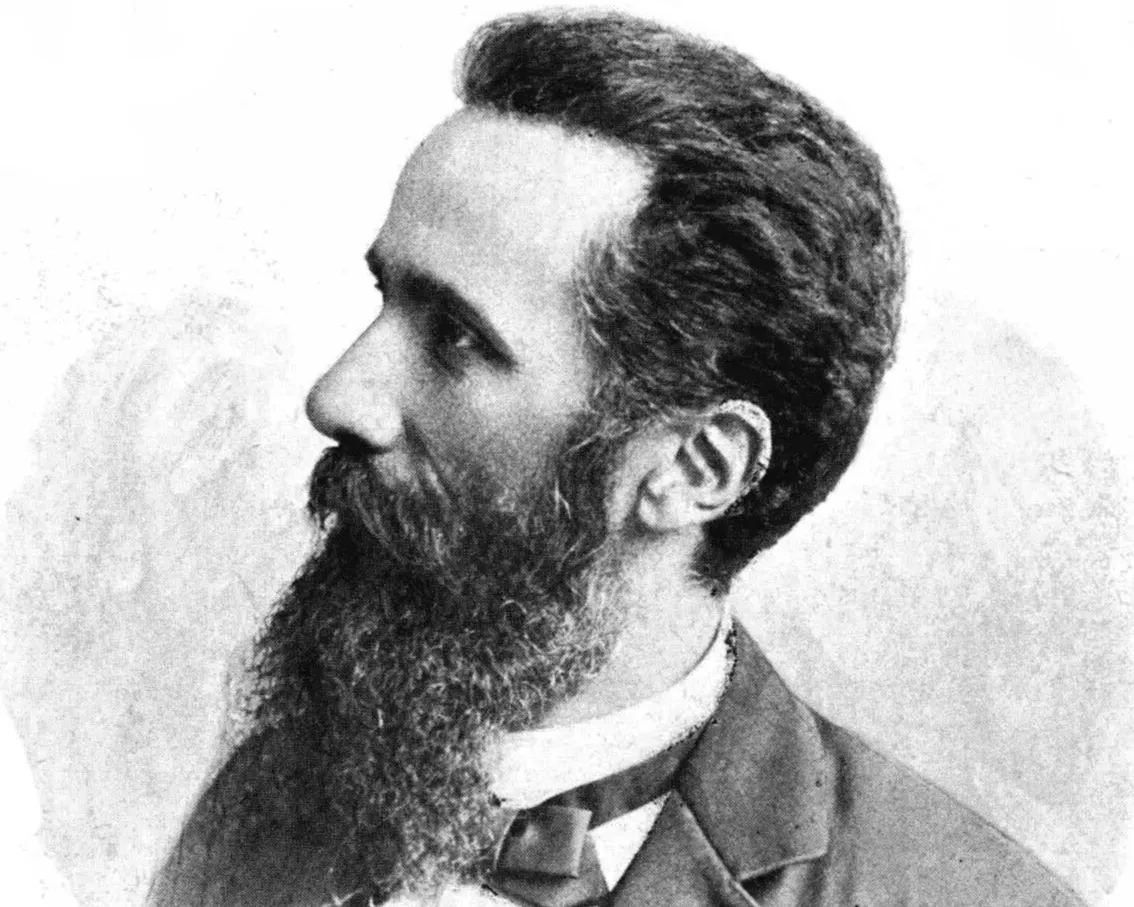
The fourth and final rule of the good engineer finally comes from an engineer, namely Galileo Ferraris, founder of the first school of electrical engineering in Italy, later incorporated into the Politecnico di Torino. In a speech that tradition attributes to him, Ferraris said: “Let my mind, gazing into the future, delight in the vision of a generation intent on nothing but the good of our common country, no longer divided by struggles between personal factions, but by struggles of ideas, which leave no trace of bitterness in the soul, just as the hurricane leaves no trace in the sky”. The responsibility on our shoulders, then, is to give life to struggles of ideas that, like a hurricane, sweep away prejudice, dishonesty and the presumption of those who make decisions without being aware of their own limits.
And so perhaps, after all these rules, being an engineer is not so different from being an ordinary person with a bit of “common sense”, enough to understand that the challenges we face must be solved with professionalism, seriousness and determination, yes, but above all with great humility.
P.S. Heartfelt thanks to the person who taught me these “rules” during my university years, Prof. Aldo Canova, a friendly face at the Politecnico and a model of an engineer “for real” to which I aspire (asymptotically).


Comments