· 4 min read
That's how it's done - Beyond the rules
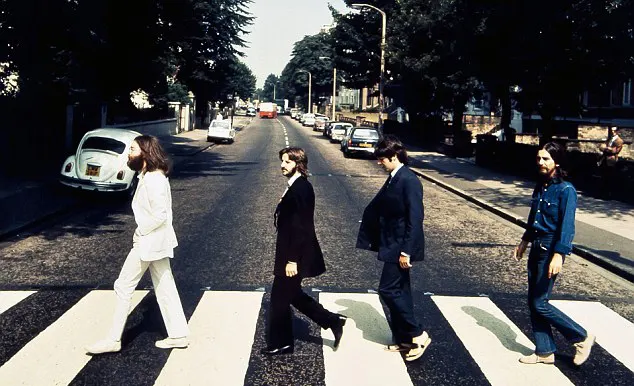
Originally written in Italian. This English version is an automatic translation and has not been reviewed: it may contain errors. Read the original
- Thou shalt not close doors in advance.
- Take no alternative paths.
- Remember to keep holy the pay cheque.
- Thou shalt not covet another’s path.
These are just a few of the unquestionable commandments that are drummed into our heads from childhood. You’ll go to primary school, then middle school, then you’ll choose a secondary school that opens many “doors”, you’ll take a university degree that gives you lots of opportunities and lets you find a job, so as to reach financial stability, so that you can get married, have two children and finally say you have achieved success. Seen this way, life looks like a long staircase, steep and tiring, made only of sacrifices and decisions taken for a greater good, an ultimate goal: being able to say one day, “There, now I’ve made it”. It is the pot of gold waiting for us at the end of the tunnel, the light at the end of the darkness, success against mediocrity. The problem with this view of the world, though, is that it implies a certain idea of success, an idea born of the consumer society, in which life itself becomes a good to be consumed, in which we must survive and save ourselves so that one day we can enjoy the longed-for happiness that a salary with lots of zeros, company perks and a picture-perfect advertising family will give us. The truth, however, is that there may be no pot of gold, that not everyone may get there, and that once there it may not bring happiness. The truth is that there is no solution to every problem, no final balance to aim for, because everything changes and everything flows; we are all different and yet all the same, we all wear a mask behind which we hide our dreams, our fears, our weaknesses.
Living for the pot of gold is a strategy that may work for some, for those who, like Cardinal Melville in Nanni Moretti’s “Habemus Papam” (released in English as “We Have a Pope”), feel “that they are among those who cannot lead, but must be led”. Constantly chasing a goal set by someone else can only lead to a withering of one’s abilities, in which you live in perpetual expectation, waiting for an afterwards that may never come and that, if it does come, may catch us unprepared, because we are no longer used to running, only to chasing. Waiting for the afterwards may indeed remain nothing but waiting, an endless pursuit dictated by external rules and laws, by “that’s how it’s done” and “that’s how it will go on being done”; never mind if along the way we lose pieces of ourselves or follow a path we don’t like, success won’t wait. But as Marco Montemagno (an Italian tech entrepreneur and video blogger) recently said in a video, 99% of the time you’re not having a career: you’re having a life, and you risk not noticing it. And so, within this pervasive, one-way way of thinking, the madmen take on particular importance: those who do not conform to the laws of the world, but blaze new trails and new paths. And if you don’t like the word madmen, we can simply decide to call them intelligent people, because intelligence doesn’t follow rules, dogmas, common patterns. Intelligent people are those who place themselves above the rules and below the law, in that narrow space where the air is fresher and less stale. Because rules are limits, often meaningless, pure social convention; they take space away from creativity and enthusiasm and build copies, all alike, at risk of getting lost in the crowd. So the salvation of the human race is that every now and then someone decides to break the mould, to rebel, not to conform, to stop halfway through the race and carry on down another road. They are David and Goliath at the same time, the innovators, the awkward ones, those who know nothing of “political correctness”, who don’t let themselves be overwhelmed by other people’s opinions and aren’t afraid to go on alone, who look for a cure for boredom and fight until they find it. They are poets, engineers, philosophers, those who escape common logic, who cannot be confined to a well-defined category, because if there are no rules there are no categories.
Madmen are often selfish, because they act above all for themselves, because they are often left alone, because they change everything so that everything really changes. And if there are no rules, there are no dogmas, the only rule they can pass on to us, the only instinct they carry inside and that can help us change, is that there is just one commandment: courage.
Further reading
- La Trappola della Carriera (“The Career Trap”, in Italian), Marco Montemagno — ▶ video on YouTube
- Storia della mia vita – Ritratto di un Viandante, Marco Moraschi — read the article
- Cambiare il mondo con un fucile a elastici (“Changing the world with a rubber-band gun”, in Italian), Massimo Mantellini — Il Post
- Blowin’ in the wind, Bob Dylan — ▶ video on YouTube



Comments